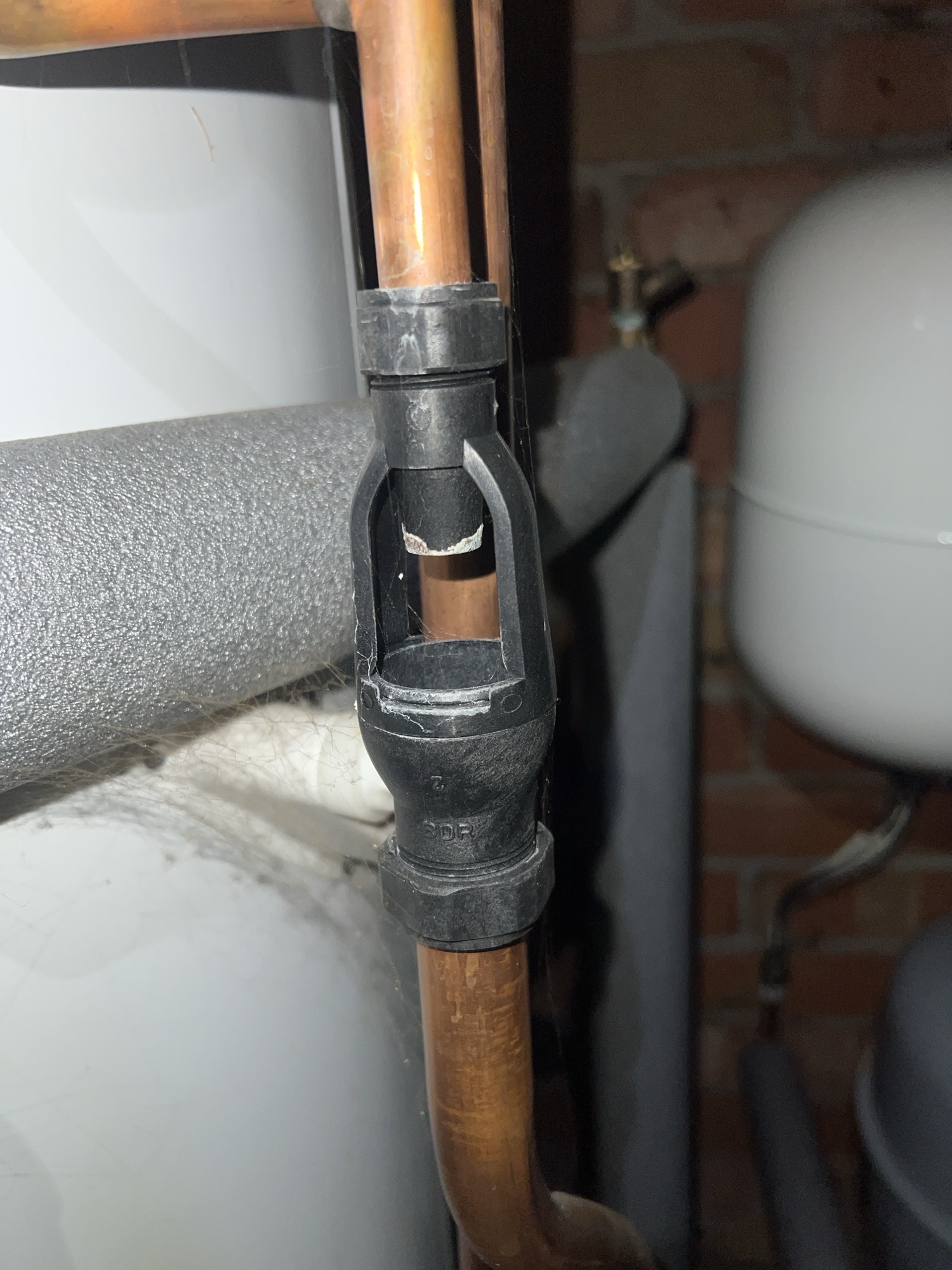
Most people ask what is a tundish for when they see water dripping into it in their airing cupboard.
Why have I got a tundish?
A tundish is part of the safety equipment on an unvented hot water tank.
It is there so you can see if any water is flowing from the safety valves.
Why would water be flowing from my safety valves?
Water can be flowing from the safety valve for the following reasons:
- Faulty temperature and pressure relief valve
- Expansion relief valve faulty
- Pressure reducing valve fault
- Expansion vessel requires servicing or is burst
- Unvented hot water cylinder is overheating
What does a tundish look like?

A tundish is normally a black plastic device that connects a small diameter pipe to a larger diameter pipe. It’s always close to an invented hot water tank.
What is a tundish for?
A tundish is an important safety feature of unvented hot water tanks.
As unvented tanks are sealed any unwanted pressure build up could cause them to burst.
Unvented hot water tanks always have a series of controls. The controls regulate the pressure inside the tank and the temperature inside the tank.
If the pressure or temperature get too high the safety valves open. The water released from the safety valve goes into the tundish. From the tundish it flows down a pipe to outside.
What is the most common cause of water running in a tundish?
The most common cause of water running in a tundish is an expansion vessel fault.
Expansion vessels on unvented tanks should be serviced every year.
It’s important to pressurise the tank to the pre charge level stated on the label.
If this isn’t done the unvented tanks should has no way to regulate the pressure inside.
This causes the expansion relief valve to opens.

Why does a tundish make my unvented safe?
If the saftey discharge pipework is blocked outside the house a dangerous amount of pressure can build up.
The tundish is designed to create an air gap in the discharge pipework.
A blocked discharge pipe outside will not cause a dangerous build up of pressure when there is a tundish.

What happens if the safety discharge pipework is blocked?
Any extra water pressure will still be released from the tank.
Fortunately for the homeowner the pressure and temperature in the tank won’t get to dangerous levels.
Unfortunately this extra water pressure will flood into the property via the tundish.
This avoids the tank bursting but causes a substantial amount of property damage.
How can I avoid tundish dramas?
- Get your unvented tanks serviced every year
- Inflate your unvented expansion vessel yourself. Look at our handy guide
- Find where the discharge pipework ends (usually outside). Make sure it is kept clear so water can flow out if necessary.