What is solar thermal?
Solar thermal is a way of heating hot water from the sun. Have you ever wondered what parts are in a solar thermal system?
Fluid is pumped through a panel exposed to the sun. The fluid heats up in sun. The hot fluid is then pumped back to the hot water tank where it transfers it heat.
The are two main types of solar thermal:
- Sealed system
- Drain back system
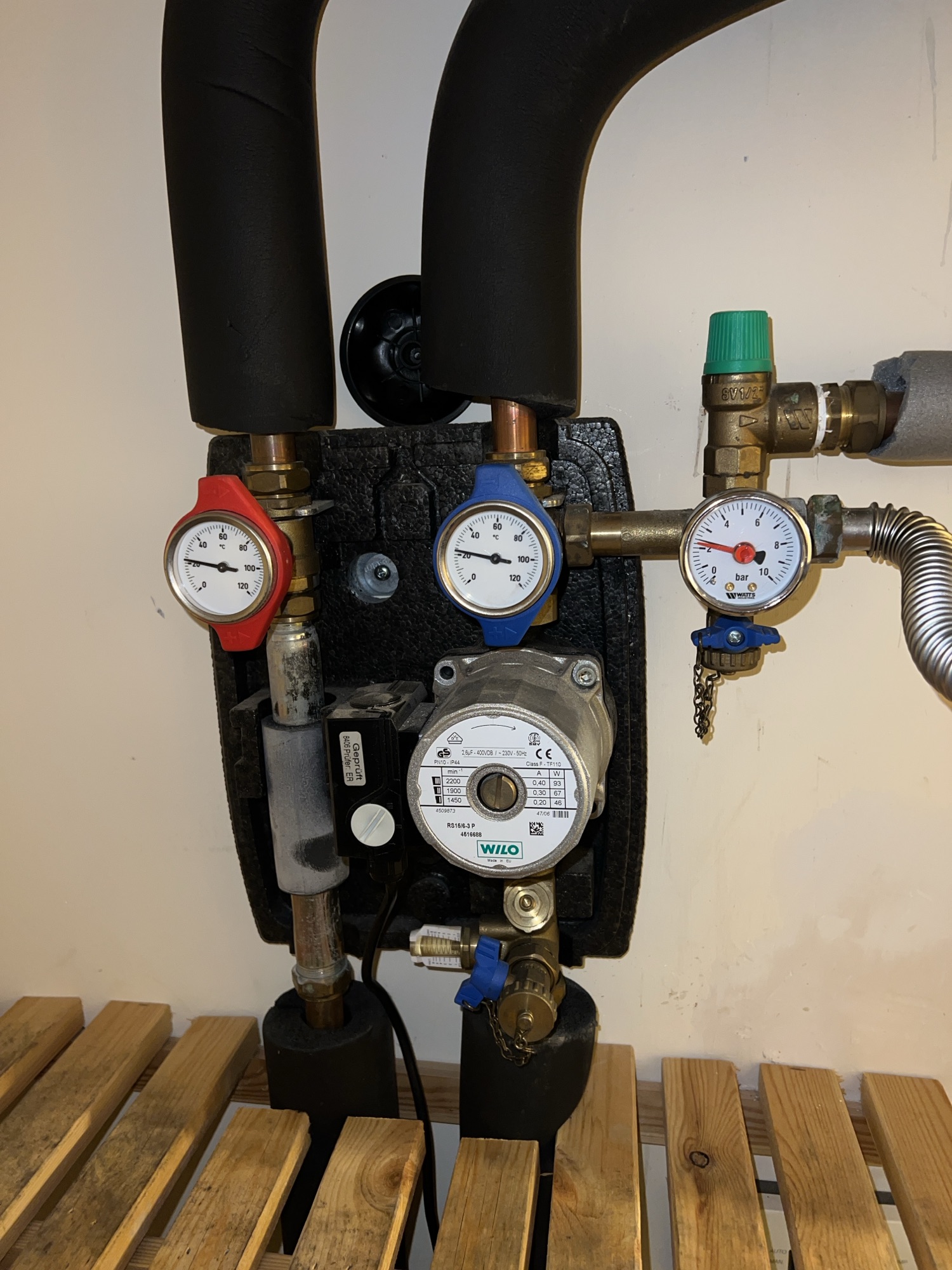
Solar pumping station
The solar fluid is pumped to the solar panel then back to the hot water tank by the solar pumping station.

A solar pumping station generally comes as one unit. With all the required plumbing fittings for the system to work.
Solar thermal controller
The solar thermal controller is the brains of the solar system. It decides when the solar system can activate to heat the hot water tank.

Solar panels
The solar thermal panels (also called collector) are designed to collect the heat from the sun. This is then transferred to the solar fluid.
There are two types of solar thermal panel:
- Flat panel
- Evacuated tubes
Flat panel solar collector
A flat panel solar collector is the simplest type of solar panel.
It is a flat panel built into the roof of the property. This has pipes or channels to carry the solar fluid covering the whole surface area.
The panels are dark which helps to absorb the heat from the sun.

Solar thermal evacuated tube.
Evacuated tube solar thermal is a more efficient but much more complicated system.

Each tube collects heat when exposed to the sun. The heat is transferred via an internal heat pipe to the solar fluid.
The collector is in the glass tube. The glass tubes are in a vacuum so any heat that enters can’t escape. This makes them 30 to 50% more efficient than a flat panel collector,
Pressure gauge
Sealed and pressurised solar thermal systems are the most common. Some brands have a system where the panel drains back into a holding tank after use. You can read more about them here.
A sealed system raises the boiling point of the solar fluid. This reduces the number of times the fluid boils in the panel during stagnation.
Read more about this in our guide to stagnation in solar systems
The pressure should be close to 2bar.
Like all sealed systems the pressure will go up when it is hot.

Pressure relief valve
Designed to open if the pressure rises too high in the solar system.

Flow meter and adjustment
The solar fluid should be pumped around the solar system at a low flow rate.
This is to give the fluid enough time to collect the maximum amount of energy from the sun.

The flow rate is given in l/min and should be set at either:
- 2l/min for each panel on the roof
- The flow rate in the manufacturers instructions
On this pumping station the flow is adjusted by turning the Allen key grub screw.
Circulating pump
The circulating pump moves the solar fluid around the circuit. It’s a continuous loop through the panel then back to the tank.

The pumps are specially made to handle the combination of solar fluid and high temperatures.
Isolating valves with thermometer
Solar pumping stations always have two Isolating valves with thermometers.
They are used during flushing and filling the system.
They have several jobs:
- Isolate the flow and return pipework
- Show the temperature of the flow and return pipework.
- They have integral non return valves that stop reverse circulation.


Expansion vessel
Every sealed heating or hot water system has to have somewhere for the fluid to expand into.

The most common is this 18l specialist solar expansion vessel.
They generally have a pre charge of 2.5bar.
Solar expansion vessels must be installed with the pipe coming off the top. (the expansion vessel in the picture is upside down). This keeps any bubbles of steam away from the diaphragm in the vessel.
Discharge container
In a situation where the pressure in the solar system gets too high a safety valve opens. Solar fluid is discharged from the system to reduce the pressure.
The fluid is a mixture of glycol and water and is an environmental pollutant. This means it should be collected instead of being sent into a drain.
A plastic container is required in the discharge pipework to catch any fluid that is discharged.
Filling and drain valves
A filling machine must be used to fill and drain the system.
The machine is attached to the filling and drain valves.


If you found this confusing:
If you found this confusing. Please let us know in the comments section so we can clear things up for you. We love feedback and we are trying to make the best possible website. If you don’t understand then others don’t as well.
If you found this useful:
If you found this useful maybe check some of our other pages.
- How Solar Thermal Heats Your Water Efficiently
- Solar thermal flow rate
- Solar Thermal Hot Water
- What Are The Components of a Solar Thermal System?
- What is solar thermal stagnation?
- What parts are in a solar thermal system.
- Hello deary